
Beyond the Now

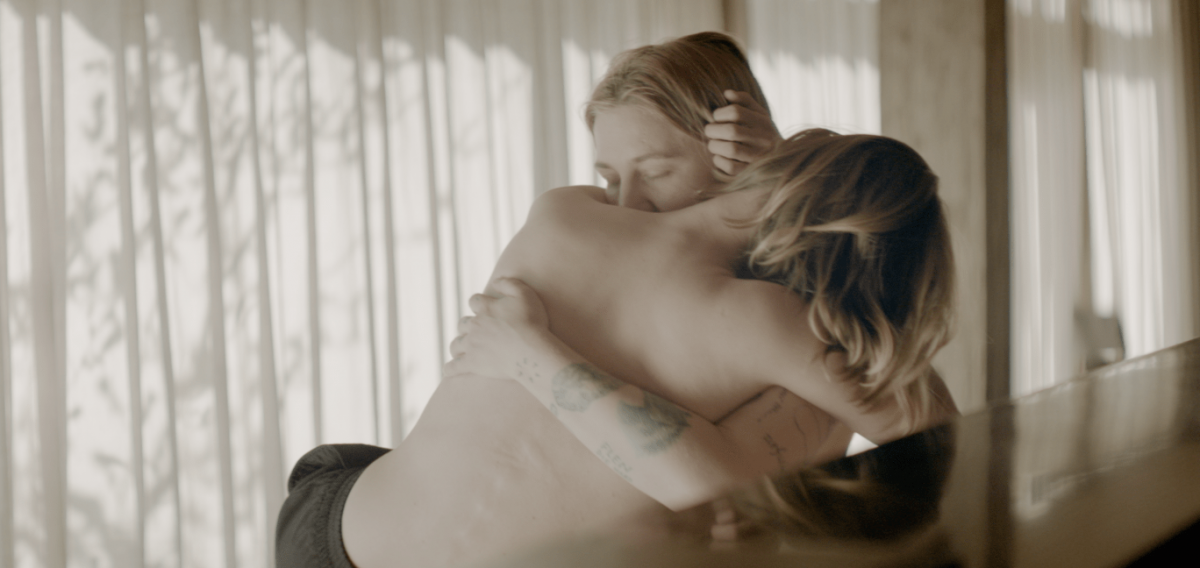
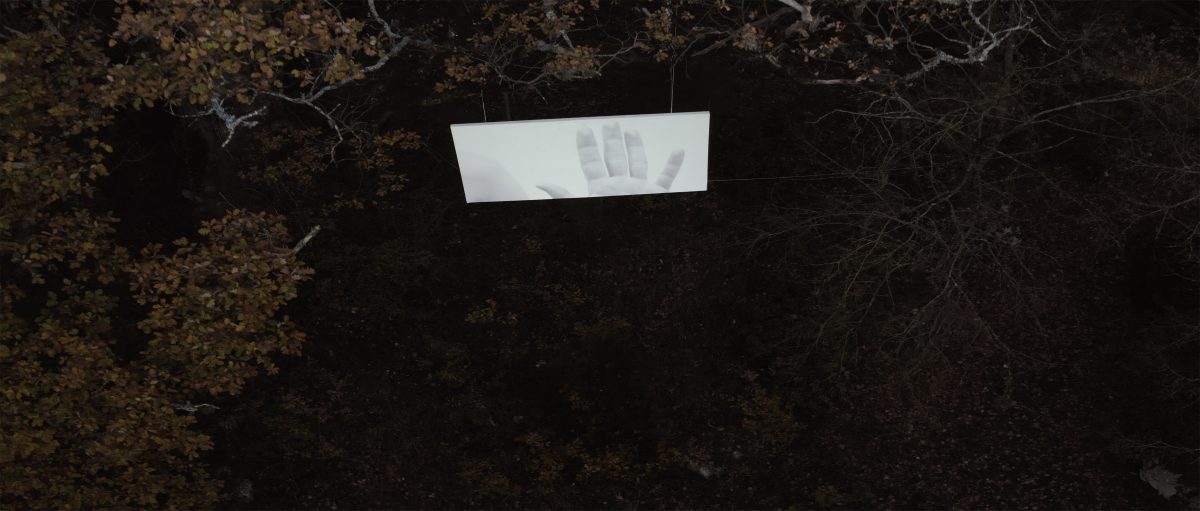
Electricity runs through Beyond the Now like a nervous system. Lights flicker, rooms fall dark, figures disappear. Shot between Olevano Romano and the deserted Akademie der Künste in West Berlin during the pandemic, the film moves through landscapes and interiors suspended between presence and absence.

The wooded hills of Olevano carry the memory of generations of European artists who travelled to Italy in search of another landscape, another possible life. In Berlin, rooms made for gatherings remain illuminated but empty. As these spaces begin to merge, electricity becomes an invisible measure of presence: a current passing through images, landscapes and bodies.

The world does not end in a single event. It loses voltage. What remains is a residual charge—the memory of contact, the afterimage of someone who was there.

Long Synopsis

Beyond the Now begins with electricity: a screen, an illuminated room, an electronic image, a body briefly caught in light. Gradually the current weakens. Lights flicker and fail, spaces recede into darkness, human figures appear and disappear like signals passing through an increasingly fragile system.

Parts of the film were shot in Olevano Romano during a residency at Villa Serpentara of the Akademie der Künste, Berlin. The landscape there has long existed both as physical terrain and as image. For generations of German and European artists travelling to Italy, the wooded hills around Olevano carried ideas of distance, freedom, solitude and another possible life.

The film enters this inherited image from the present. Burnt areas interrupt the green. Drought, fire and regeneration have entered the Romantic landscape, while traces of its old promise remain.

Other sequences were filmed inside the West Berlin Akademie der Künste during the COVID-19 pandemic, when the building had come to an almost complete standstill. Rooms made for gatherings stood empty. Corridors led through an architecture still illuminated and technically alive, while human presence had withdrawn.
As the current diminishes, electricity begins to resemble another invisible force. Its vocabulary already suggests it: charge, attraction, contact, tension. When the rooms have emptied and the landscape has almost disappeared, something continues to pass between absent bodies—a residual charge, the memory of contact, the afterimage of someone who was there.

Beyond the Now follows this current to the point where electricity and longing become difficult to separate. Love appears as energy continuing to circulate after its source has disappeared.

Artistic Statement

The starting point of Beyond the Now is a simple physical condition: without electricity, the contemporary image disappears. Light, screens, projection and much of the architecture surrounding us depend upon a current that normally remains invisible.

The film follows this invisible force into more ambiguous territory. Electricity illuminates a room, animates an image and passes through the body. Its language—charge, attraction, contact, tension—also belongs strangely to intimacy.

The forest of Olevano introduces another history of longing. The Romantic gaze searched landscape for something exceeding the visible world: distance, transcendence, escape. Two centuries later, this desire may have migrated into other forms—screens, signals, networks, electrical light—and into the connections between people.

The pandemic silence of the Akademie brought these questions unexpectedly close. A building devoted to encounters remained powered while the encounters themselves had vanished. Electricity continued to circulate through empty rooms.

Perhaps something similar occurs in memory and love. Presence disappears, yet a charge remains.

The last light is very small.

BEYOND THE NOW (2022)
German Premiere: Akademie der Künste, Berlin
Double Feature: Schirn Kunsthalle, Frankfurt am Main
1-channel film
Colour / Black & White
4K, Aspect Ratio 2.35:1
Duration: 18 min
Language: German with English Subtitles


Cast
Jules Elting
Natasja Loutchko
Ida Lennartsson
Ulrike Hemberger
Cleo Zindler


Crew
Author & Director: Christin Berg
Lighting Cinematographer: Jakob Stark
Music: Matija Strniša and Filip Caranica / contemporary sounds
Film Editing: Christin Berg
Sound Recording: Thomas Funk
Assistant Camera: Nikolaus von Schlebrügge


Supported by
Institute of Villa Massimo
Akademie der Künste, Berlin
Organisation Team of Villa Serpentara